Sociology Publications
2023 Matthews, D. & Pilcher, J. (2023) ‘Uncovering the secret religious and spiritual lives of sex workers’, Conversation Insights, The Conversation, March 10th.
2022 ‘Names in adoption law and policy: representations of family, rights and identities’, Families, Relationships and Societies, early view online (co-author with Amanda Coffey).
2022 ‘How parents take more risks when naming girls than boys’, The Conversation, October 10th.
2022 ‘Say My Name Right!: The Pronunciation of Students’ Names in Higher Education’, Everyday Society, British Sociological Association, 29 September.
2022 ‘Baby names: why we all choose the same ones’, The Conversation, July 18th.
2020 ‘Names and naming in adoption: birth heritage and family making’, Child & Family Social Work, 25 (3): 568-575 (co-author with Zara Hooley and Amanda Coffey).
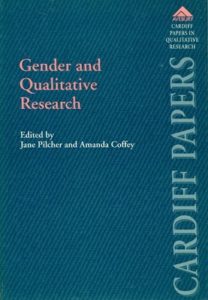
2018 Gender and Qualitative Research, Routledge Revivals series, London: Routledge (co-editor with A. Coffey).
2017 ‘Names and “Doing Gender”: How Forenames and Surnames Contribute to Gender Identities, Difference and Inequalities’, Sex Roles, 77: 812–822.
2017 ‘Before you name your baby, consider this…’, The Conversation, September 20th.
2017 Fifty Key Concepts in Gender Studies, 2nd edition, London: Sage (co-author with I. Whelehan).
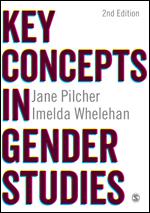
‘Key Concepts in Gender Studies is testament to the interest, energy and dynamism of feminism today. Now in a revised second edition, it must have been incredibly tough to set the limit at 50, but Jane Pilcher and Imelda Whelehan have done it again: produced a book that is lively, important and accessible. With entries that cover key concepts, historical terms, theoretical arguments, and activism from Malala to SlutWalk to transgender, this book offers an excellent introduction to debates in contemporary gender studies’. Rosalind Gill, City University London
2016 ‘Names, Bodies and Identities’, Sociology 50 (4): 764-779 (Shortlisted for the 2017 SAGE Prize for Innovation and Excellence).
2014 Thatcher’s Grandchildren? Politics, Childhood and Society Since 2000, London: Palgrave (co-editor with S. Wagg).
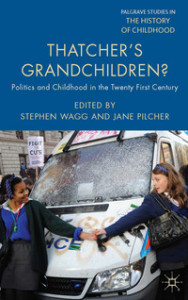
2014 ‘The politics of children’s clothing’ in Wagg, S. and Pilcher, J. (eds.) Thatcher’s Grandchildren? Politics, Childhood and Society Since 2000, London: Palgrave.
2013 ‘Small but Very Determined: a novel theorization of children’s consumption of clothing’, Cultural Sociology , 7 (1): 86-100
2011 ‘No Logo? Children’s Consumption of Fashion’, Childhood 18 (1): 128-141.
2010 ‘What Not to Wear? Girls, Clothing and Showing the Body, Children and Society 24 (6): 461-470.
2007 ‘Body Work: Childhood, Gender and School Health Education in England, 1870 to 1977’, Childhood 14 (2): 215-233.
2005 Young People In Transition. Becoming Citizens, Basingstoke: Palgrave (co-editor with C. Pole and J. Williams).

2005 ‘School Sex Education: Policy and Practice in England 1870-2000’, Sex Education 5 (2): 157-174.
2004 Fifty Key Concepts in Gender Studies, London: Sage (co-author with I. Whelehan).
‘Lively and impressive. I can easily imagine this text being used by both gender and women’s studies undergraduates and postgraduates. In particular it will enable students to get a sense of how older and more contemporary theoretical movements and debates relate to one another’. Lisa Adkins, Department of Sociology, University of Manchester.
2004 ‘Sex in Health Education: Official Guidance for Schools in England, 1928-1977’,Journal of Historical Sociology 17 (3):185-208.
2004 ‘New Consumers? The Social and Cultural Significance of Children’s Fashion Consumption’, (co-author with Boden, S., Pole, C. and Edwards, T.) Working Paper Series, ESRC/AHRB Cultures of Consumption Programme, www.consume.bbk.ac.uk/publications.html
2004 ‘The Uses of Sociology’, Sociology Review 14 (1):1-4.
2003 ‘Rethinking Adulthood: Families, Transitions and Social Change’ (co-author with J. Williams and C. Pole), Sociological Research On-line 8 (4).
2001 ‘Explaining Gender and Gender Inequalities’ in Giddens, A. (ed.) Sociology. Introductory Readings, Cambridge: Polity.
2000 ‘Change Slow A-Coming’: Domestic Divisions of Labour in the Twentieth Century’, Work, Employment and Society 14 (4): 771-780.
2000 ‘Blair’s Babes’: Formal Politics and Femininity in Britain’, Sociology Review 9 (3): 15-18.
1999 Women in Contemporary Britain. An Introduction, London: Routledge.

‘An excellent introduction to the key debates and areas of feminist theorising’. Dr Christina Hughes, University of Warwick.
1998 Women of Their Time. Generation, Gender Issues, and Feminism, Aldershot: Ashgate.
‘…a fascinating analysis of changing attitudes to the domestic division of labour, social issues and feminism during the twentieth century …This study is unique and provides considerable insight into the everyday lives of families across the generations. It deserves to be widely read and enjoyed by academics and students alike.’
Teresa Rees, Professor of Labour Market Studies, University of Bristol, UK
‘The overwhelming leanings towards individualism found in this study have important implications for a feminist perspective based on women as a collectivity. Pilcher proves that women’s accounts of gender issues are important in their own right and must be adhered to if a future feminist politics is to thrive and be relevant to women of all ages.’ Reviewer, Work, Employment and Society
1998 ‘Gender Matters? Three Cohorts of Women Talking About Role Reversal’, Sociological Research On-line 8 (4), 3 (1), www.socresonline.org.uk/3/1/Pilcher.html
1998 ‘Understanding Later Life’, Reviewing Sociology 11 (1)
1998 ‘Hormones or Hegemonic Masculinity? Explaining Gender Inequality’, Sociology Review 7: 5-9.
1997 ‘Contrary to Gillick: British Children’s Sexual Rights Since 1985’, International Journal of Children’s Rights 5 (3): 299-317.
1996 Thatcher’s Children? Politics, Childhood and Society in the 1980s and 1990s, London: Falmer Press (co-editor with S. Wagg).

1996 ‘Gillick and After: Children and Sex in the 1980s and 1990s’ in Pilcher, J. and Wagg, S. (eds.) Thatcher’s Children? Politics, Childhood and Society in the 1980s and 1990s, Falmer Press.
1996 Gender and Qualitative Research, Aldershot: Avebury (co-editor with A. Coffey).
1996 ‘Transitions to and from the Labour Market: Younger and Older People and Employment’, Work, Employment and Society 10 (1): 161-173.
1995 Age and Generation in Modern Britain, Oxford: Oxford University Press.
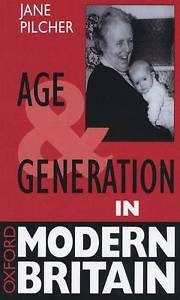
‘A systematic and immediately accessible account of this ‘new frontier’ of sociological analysis … a valuable introduction to this neglected but increasingly significant area of sociological inquiry.’ NEWI
‘Jane Pilcher’s book fills an important gap in the sociological literature by providing an overview on the role and the importance of age in contemporary British society … Written in a clear and accessible style, the book is an excellent introduction to the sociology of age and generation.’ Reviewer, Ageing and Society
1995 ‘The Gender Significance of Women in Power: Women Talking About Margaret Thatcher’, European Journal of Women’s Studies 2(4): 493-508.
1995 ‘Growing Up and Growing Older: the sociology of age’, Sociology Review 5: 8-13.
1994 ‘Mannheim’s Sociology of Generations: An Undervalued Legacy’, British Journal of Sociology 45: 481-494.
1994 ‘Who Should Do the Dishes? Three Generations of Welsh Women Talking About Men and Housework’ in Aaron, J., Betts, S., Rees, T. and Vincentelli, M. (eds.) Our Sisters’ Land. The Changing Identities of Women in Wales, Cardiff: University of Wales Press.
1993 ‘”I’m not a feminist but…”. Understanding Feminism’, Sociology Review 3: 2-6.
1989 (with, S. Delamont, G. Powell, T. Rees and M. Read) ‘Evaluating a Women’s Careers Convention: Methods, Results and Implications’, Research Papers In Education 4: 57-76.
1989 (with, S. Delamont, G. Powell, and T. Rees) ‘Challenging Occupational Stereotypes: Women’s Training Roadshows and Guidance at School Level’, British Journal of Guidance and Counselling 17 17: 59-67.
1990 (with, S. Delamont, G. Powell and T. Rees) Career Choices for Schoolgirls: So You Want to Run a Women’s Training Roadshow? A Handbook for Organising Careers Conventions to Promote Equal Opportunities in Training and Employment for Girls and Women, Welsh Office, Cardiff pp 18.
1990 (with, S. Delamont, G. Powell and T. Rees) Career Choices for Schoolgirls: An Evaluative Study of Cardiff Women’s Training Roadshow, Welsh Office, Cardiff pp 34 (bilingual).
1988 (with, S. Delamont, G. Powell and T. Rees) ‘Women’s Training Roadshows and the “Manipulation” of Schoolgirls’ Career Choices’, British Journal of Education and Work 2: 61-66.
1988 (with, H. Williamson) A Guide to Young People’s Experiences in a Changing Labour Market. An Uphill Struggle, Youthaid, London pp 38.